Fintech alert design guidelines curated for the dark pool trading sphere
CLIENT:
Liquidnet
SKILLS:
User Research, Interactive Prototyping, Product Design
DURATION:
7-8 months
TEAM:
2 UX Researchers, 3 Designers
OVERVIEW
The life of an institutional trader is intense. They spend 40+ hours a week finding the right trades at the right time with millions of dollars at stake every second.
How might we create a smoother decision making process for Liquidnet traders, while keeping them engaged?
Our client Liquidnet approached us with a goal of helping them figure out how to better automate their trader's decision making process. My role in this project was to lead the UX design process and help mentor other teammate's how to collaborate cross functionally.
BACKGROUND
Liquidnet serves as a premier broker, with a focus in the dark pool trading space aka an off market exchange. Traders or "members" of their platform use their specialized technology to find the most liquidity through a matching service where they can find the best prices at the time they need it.
Traders need to be informed with the latest updates constantly and experience information overload
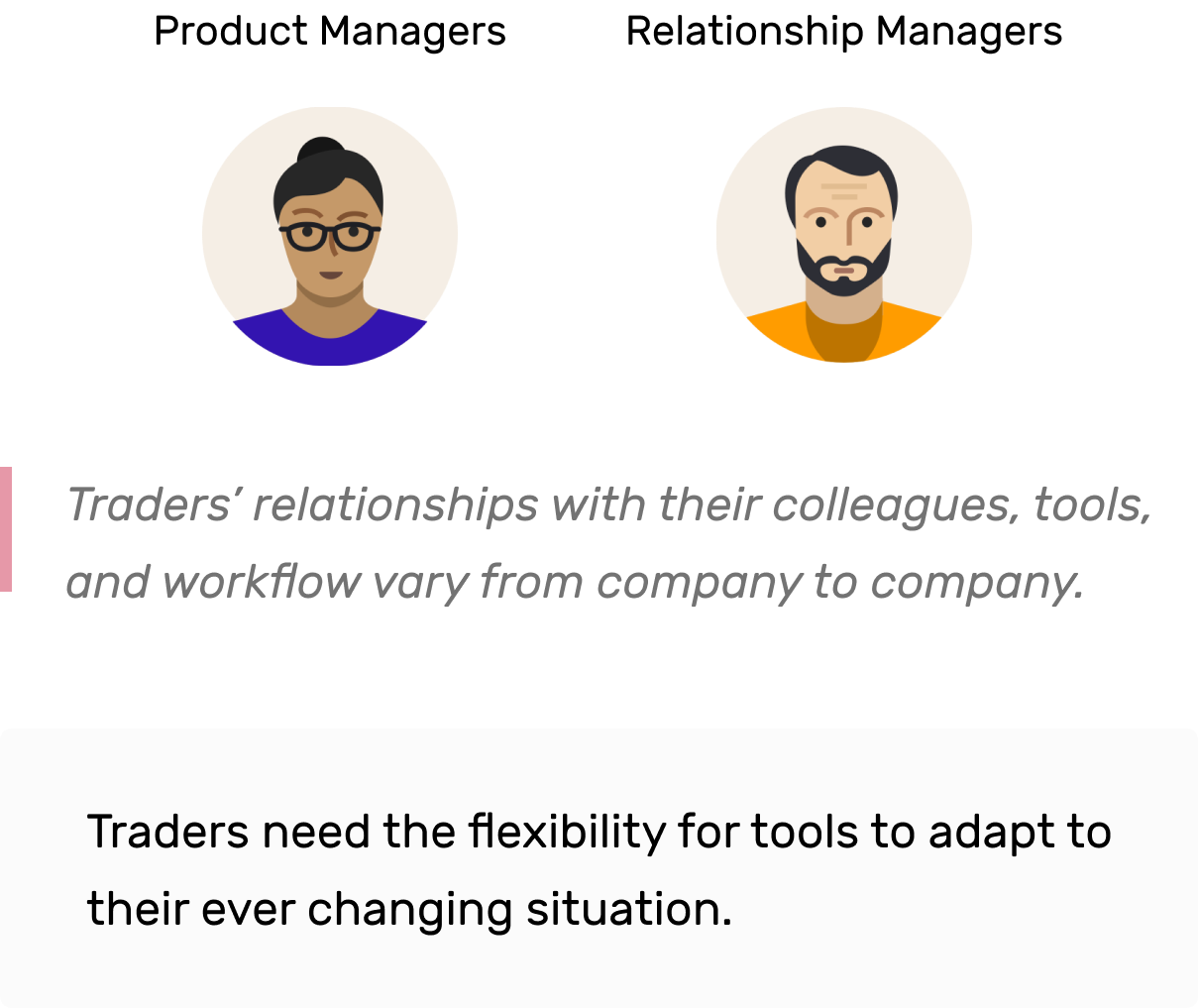
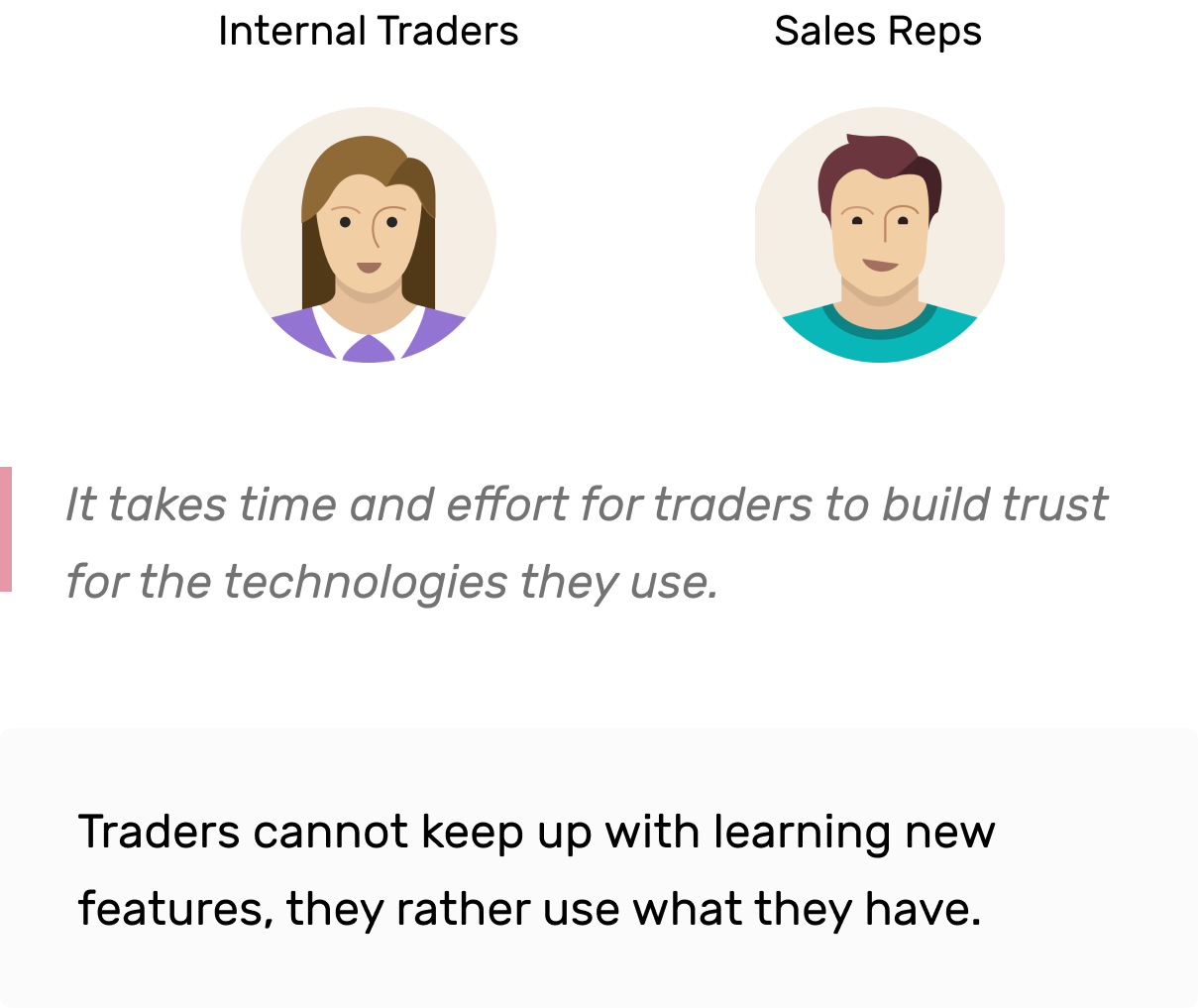
Because the market is always in flux, traders often have to plugged in all the time. They are usually too loyal to their own routines and are unwilling to adapt and learn about new products.
SOLUTION
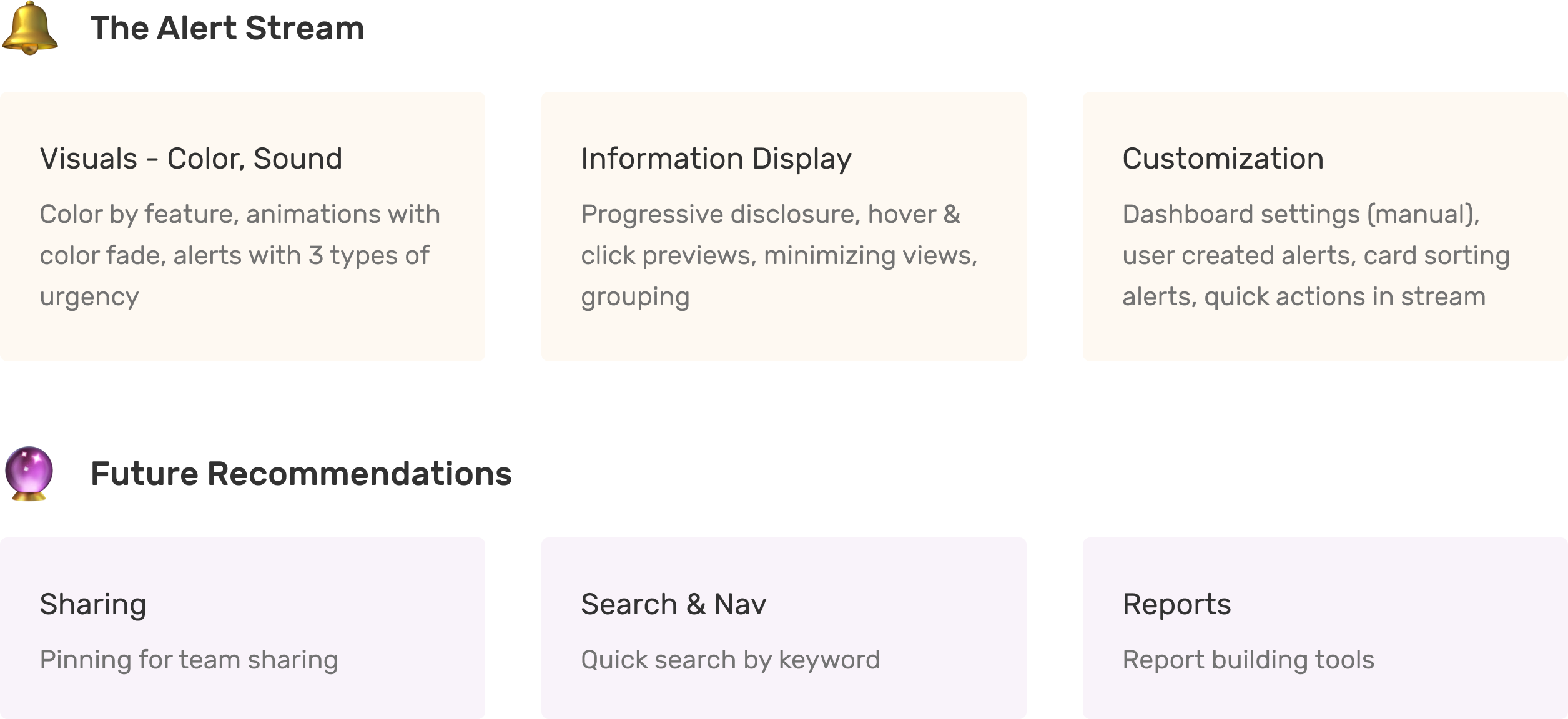
We proposed an automated decision making process represented through 4 alert driven designs principles
The principles of visuals and sounds, information hierarchy, customization, and future recommendations are built on top of each other for Liquidnet to implement a well rounded trading alert system.
We presented these recommendations through the Tradewell Playbook, a website which contains our research and prototypes.
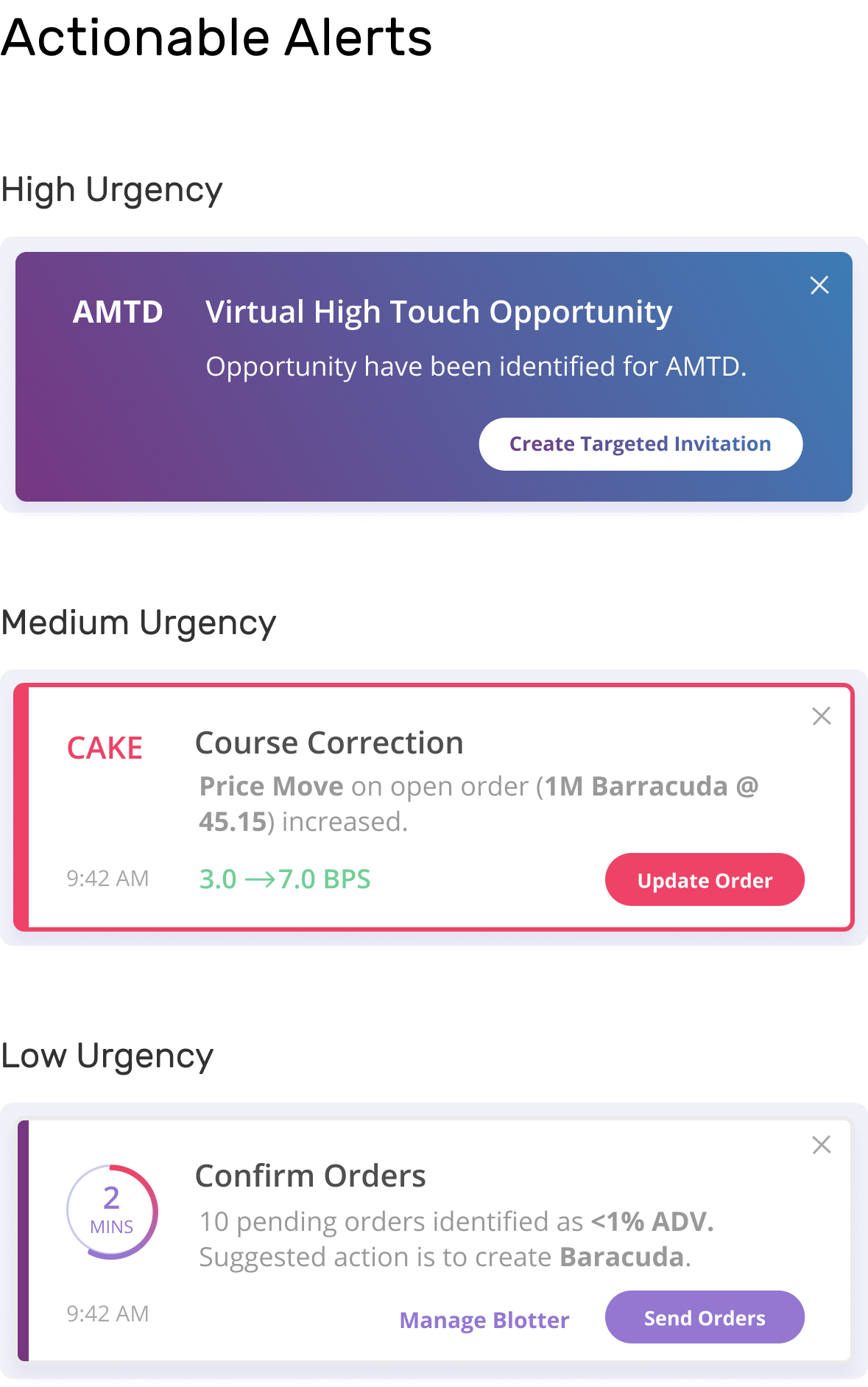
Alerts that highlight urgency through color by feature and minimally invasive sounds helps captures the trader’s attention better.
RATIONALE
Traders currently only use Liquidnet’s matching alerts which use static color and sound. Dynamic color and sound can indicate different levels of urgency to help the trader better distinguish how much attention he should allocate for every incoming alert.
Information Hierarchy
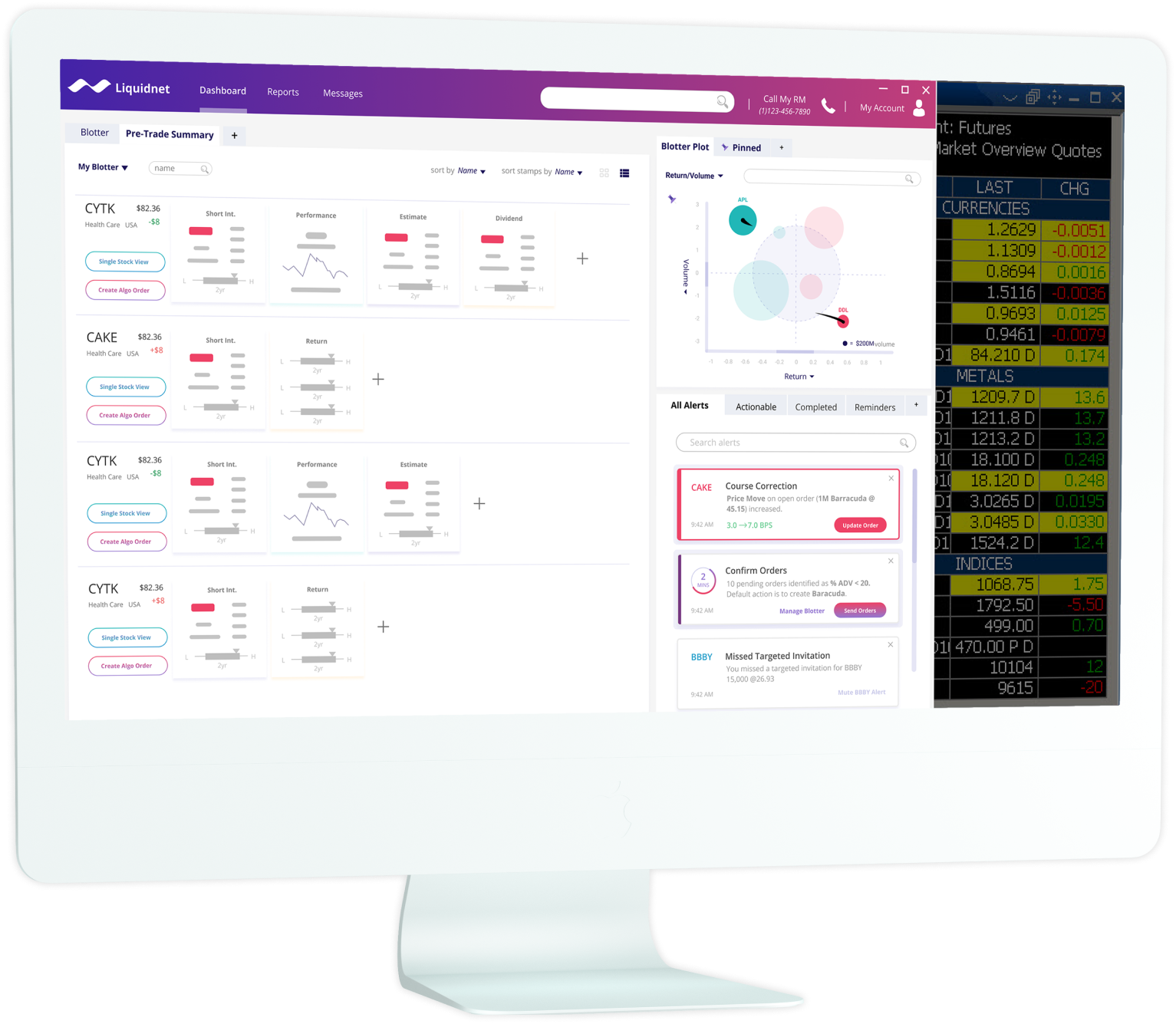
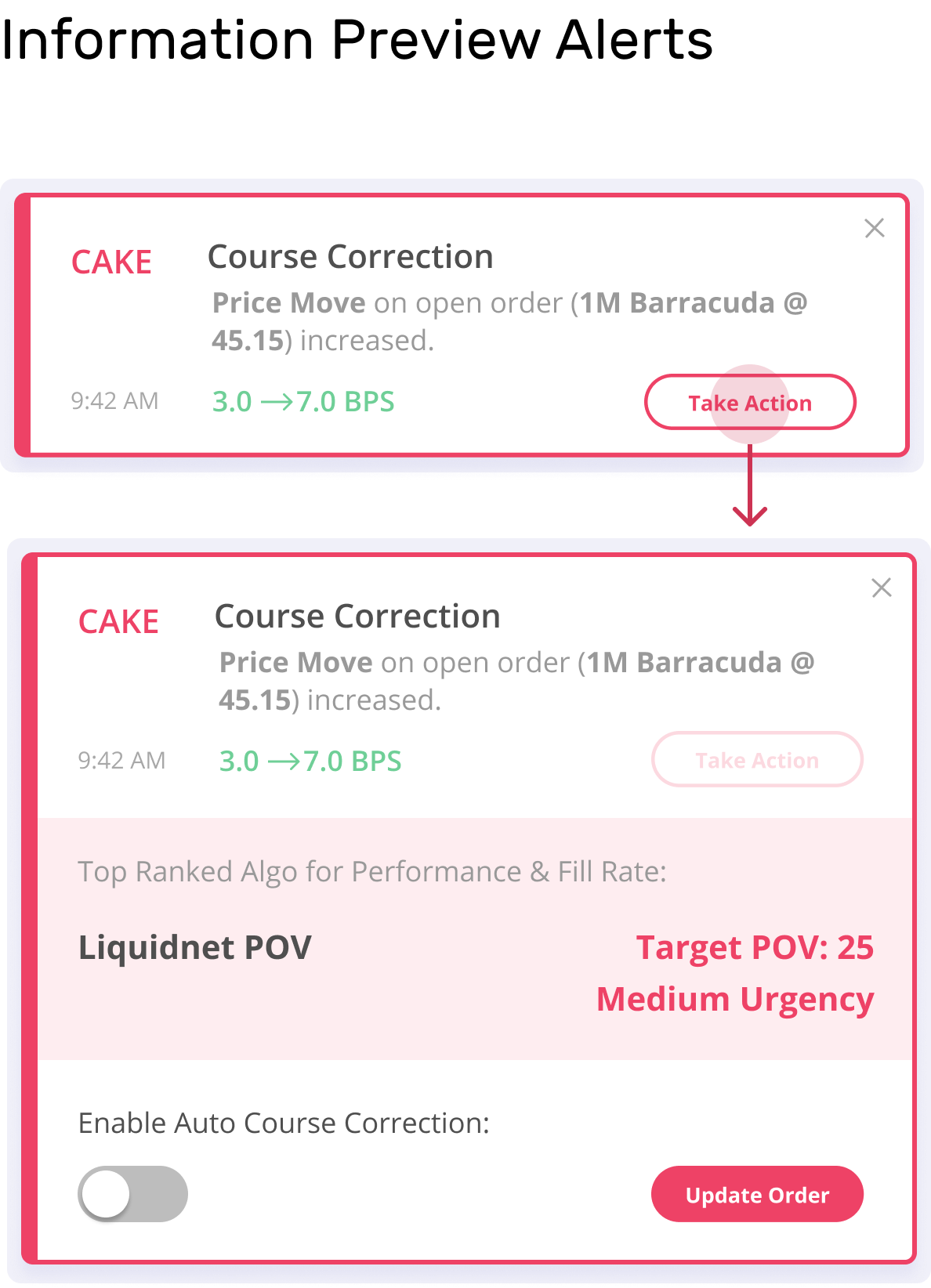
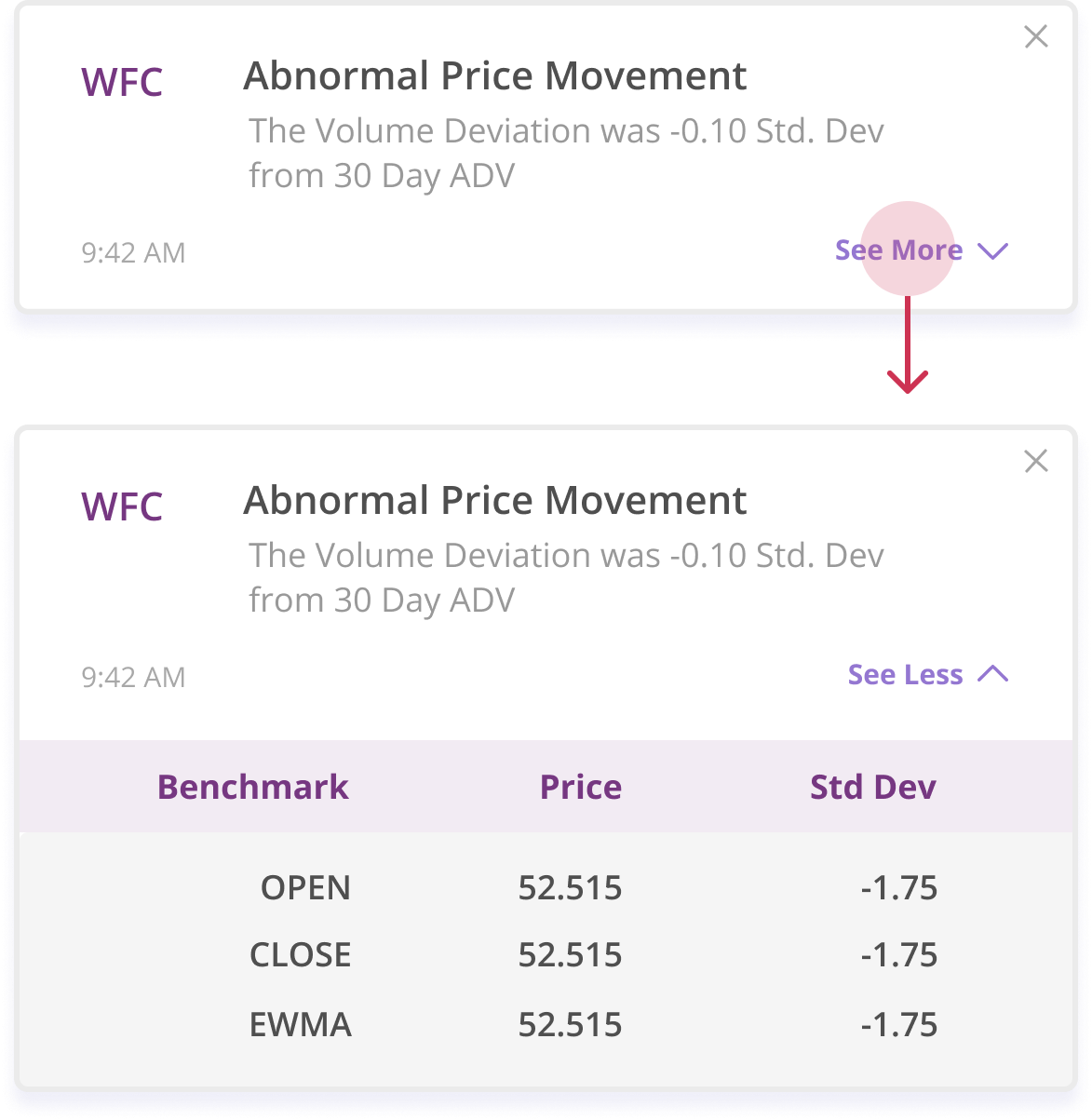
Alerts can direct traders to their next action in Liquidnet by exposing incremental information through the form of previews and snapshots.
RATIONALE
Research showed us traders are bombarded with information they don’t need. Showing only a high level summary of the alert can direct the trader to make efficient decisions as every minute counts.
Customization
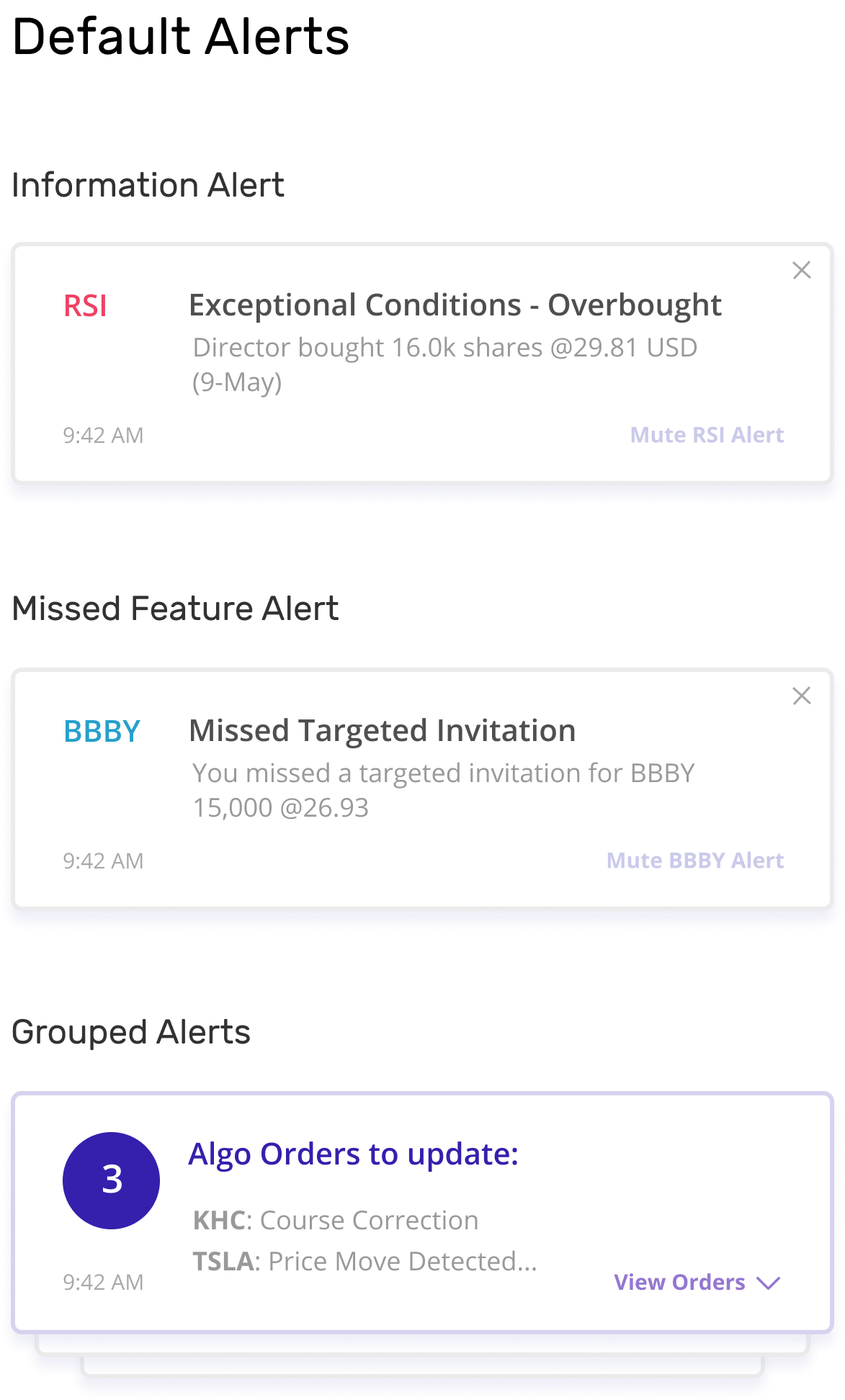
Allowing traders to customize for context helps with building an individualized system.
RATIONALE
Although traders are creatures of habit, they want to customize workflows to fit their trading strategy. The ability to customize sharing alerts or setting alert urgency provides the trader more workflow optimization.
Future Features
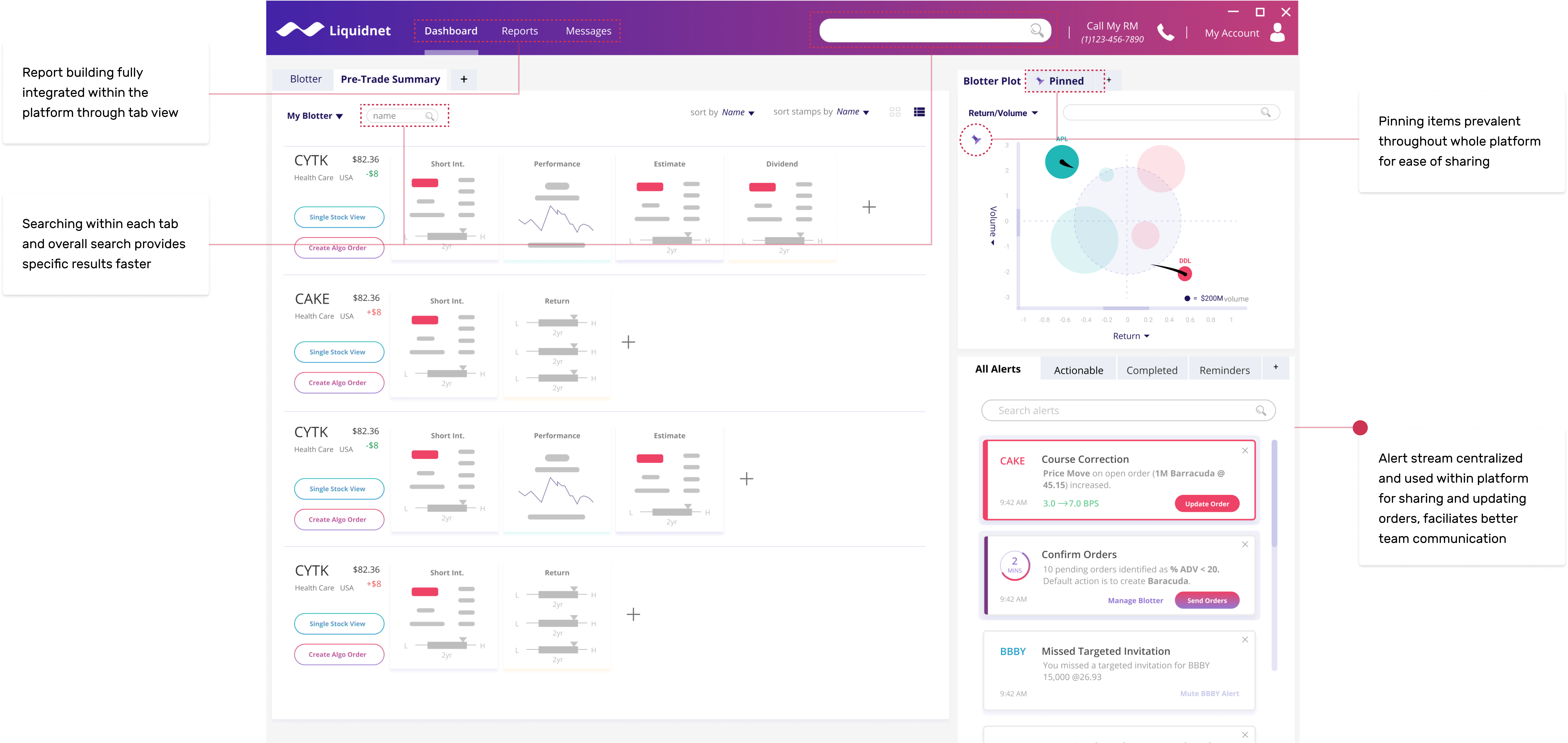
Features such as smart report building, automated search, and sharing alerts can work alongside alerts to better create an automated Liquidnet platform.
RATIONALE
Traders struggle with using multiple tools to build reports at the end of the day and often walk over to their colleague’s desks to ask questions. These features suggestions can help solve these long standing problems of trading software.
OUR PROCESS
So how did we come to create alert design guidelines to for Liquidnet to incorporate into their software?
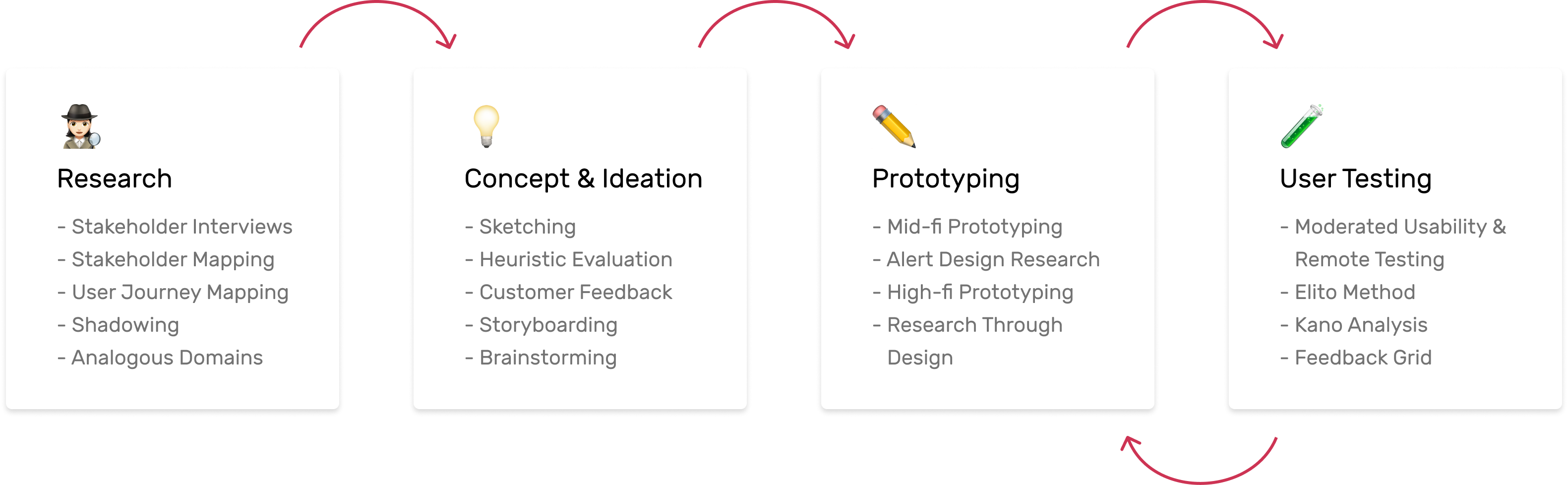
Our team tried to approach this project by using an end to end research to design process which included financial onboarding, stakeholder interviews, and user observations. The latter half of the project was defined by using research through design and usability testing with real and proxy users.
USER RESEARCH
Diving into fintech and trading
We started our project by quickly picking up on financial jargon and spoke to internal Liquidnet employees to learn who our users were. Since we could not access Liquidnet's traders directly, these basic findings helped us form a picture of the trading landscape.
To understand users, we looked into their daily schedules to see what their activities looked like. We found that their day begins with team work and ends with wrapping up strategy and future thinking. Since most tools only address their needs during market open hours, we wanted to create opportunities for pre and post market times as well.
How does Liquidnet wants to fit into the picture?
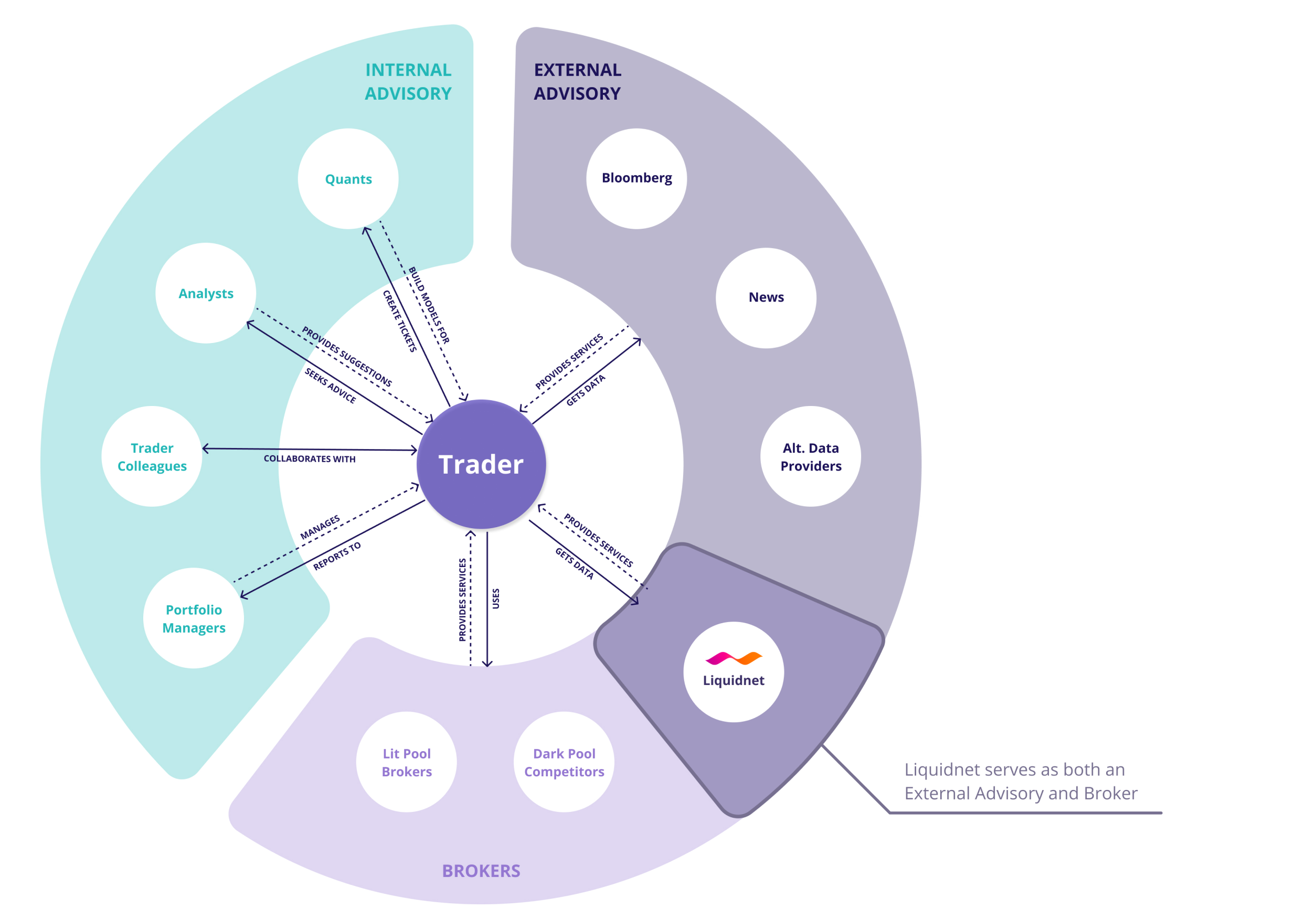
From previous findings, we created a stakeholder map to better visualize the trader's relationships with different departments. We saw that Liquidnet wanted to take part in becoming a sole source for the trader's external advisory and offer news and data resources as a smart platform.
Uncovering long standing needs in the industry
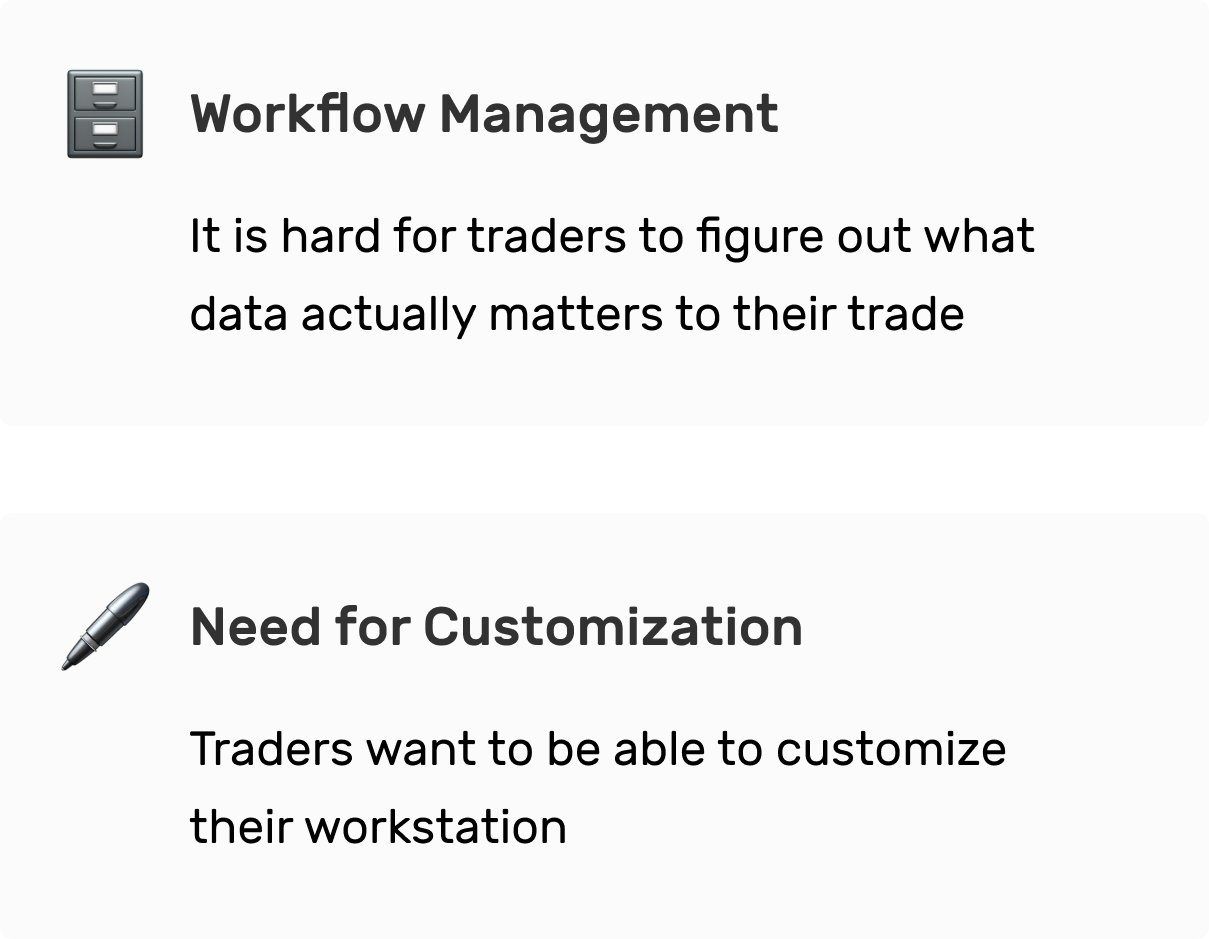
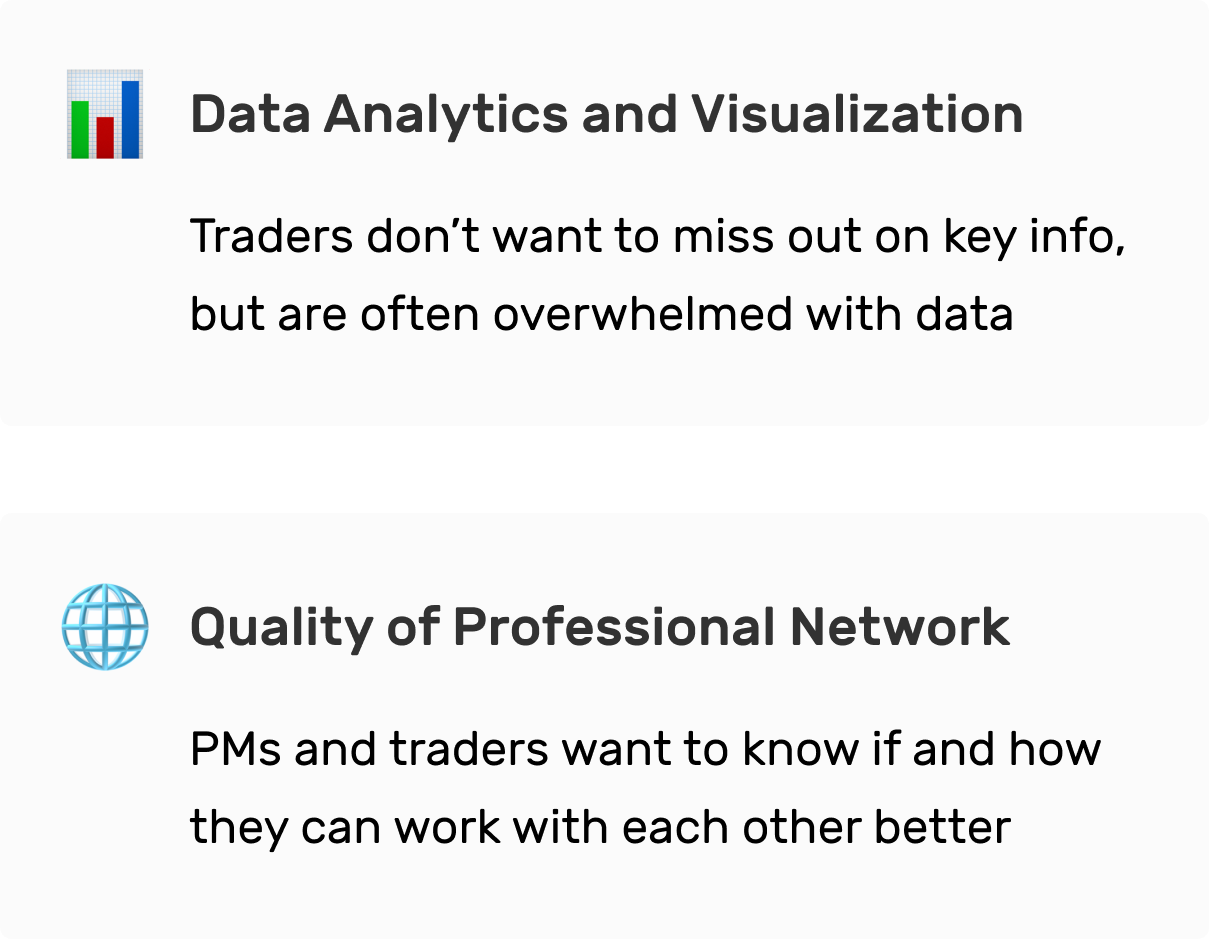
To dig deeper to find ongoing industry problems, we found around 30 traders in our personal network specializing in equity, fixed-income, and quant trading to see current trends and opportunity areas. After synthesizing our interview notes, we quickly jotted down some main problems alongside our previous findings.
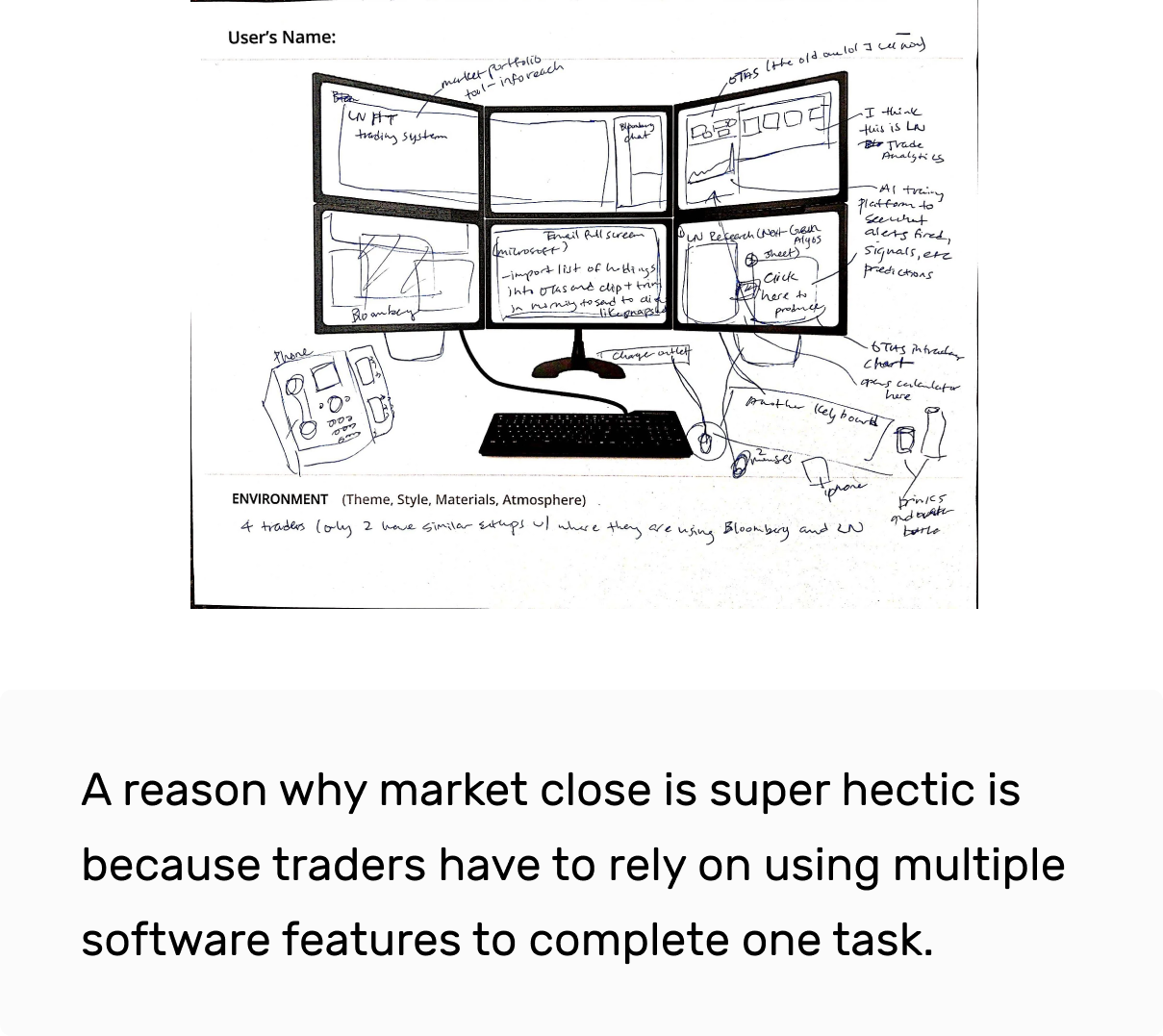
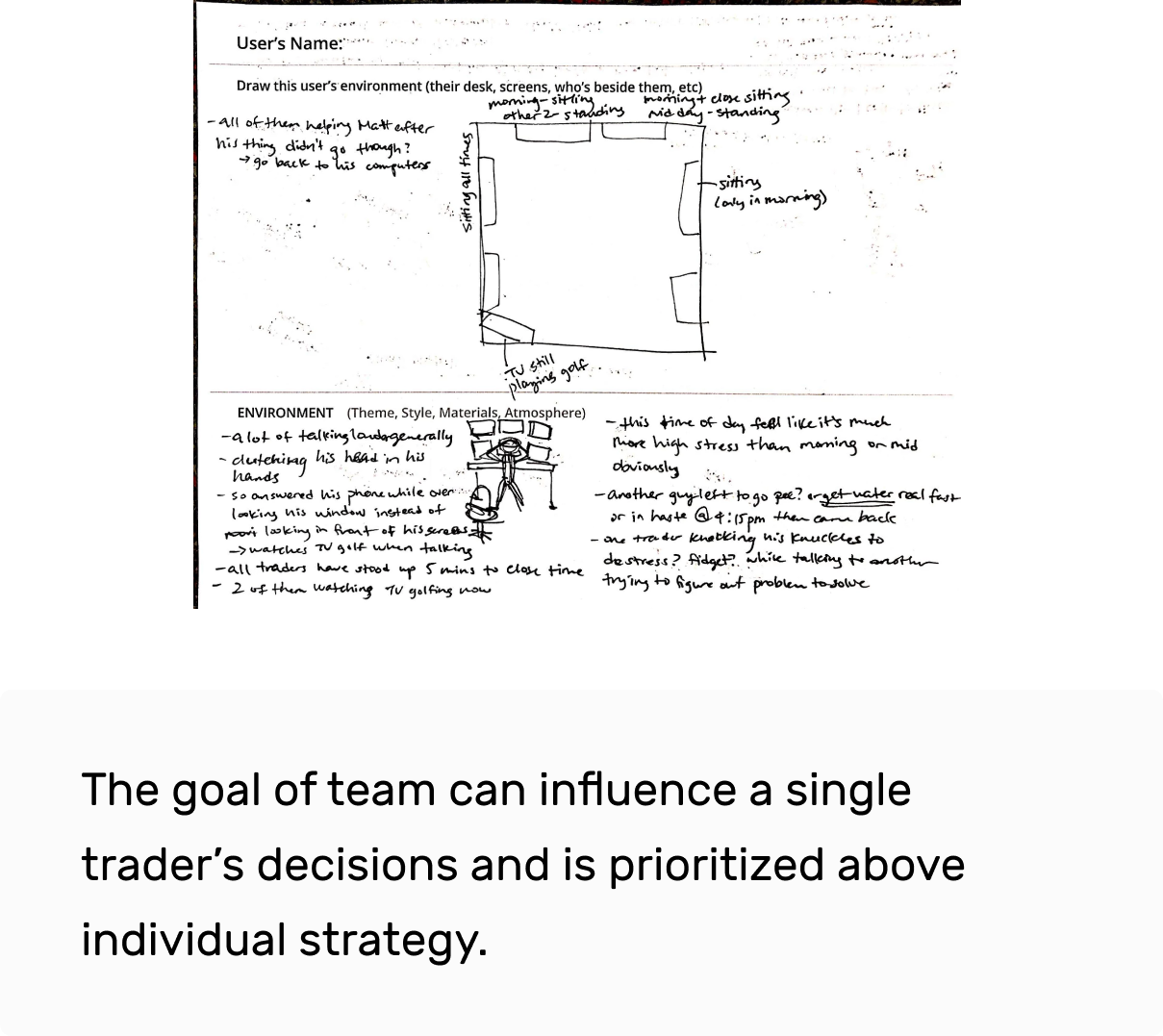
Now that we had an idea of who our users were, we took the chance to visit a trading floor and see first hand how traders operate. We used an AEIOU method to draw out our observations and found a couple of interesting facts relating to team performance.
Empathizing with trader mentality through poker studies
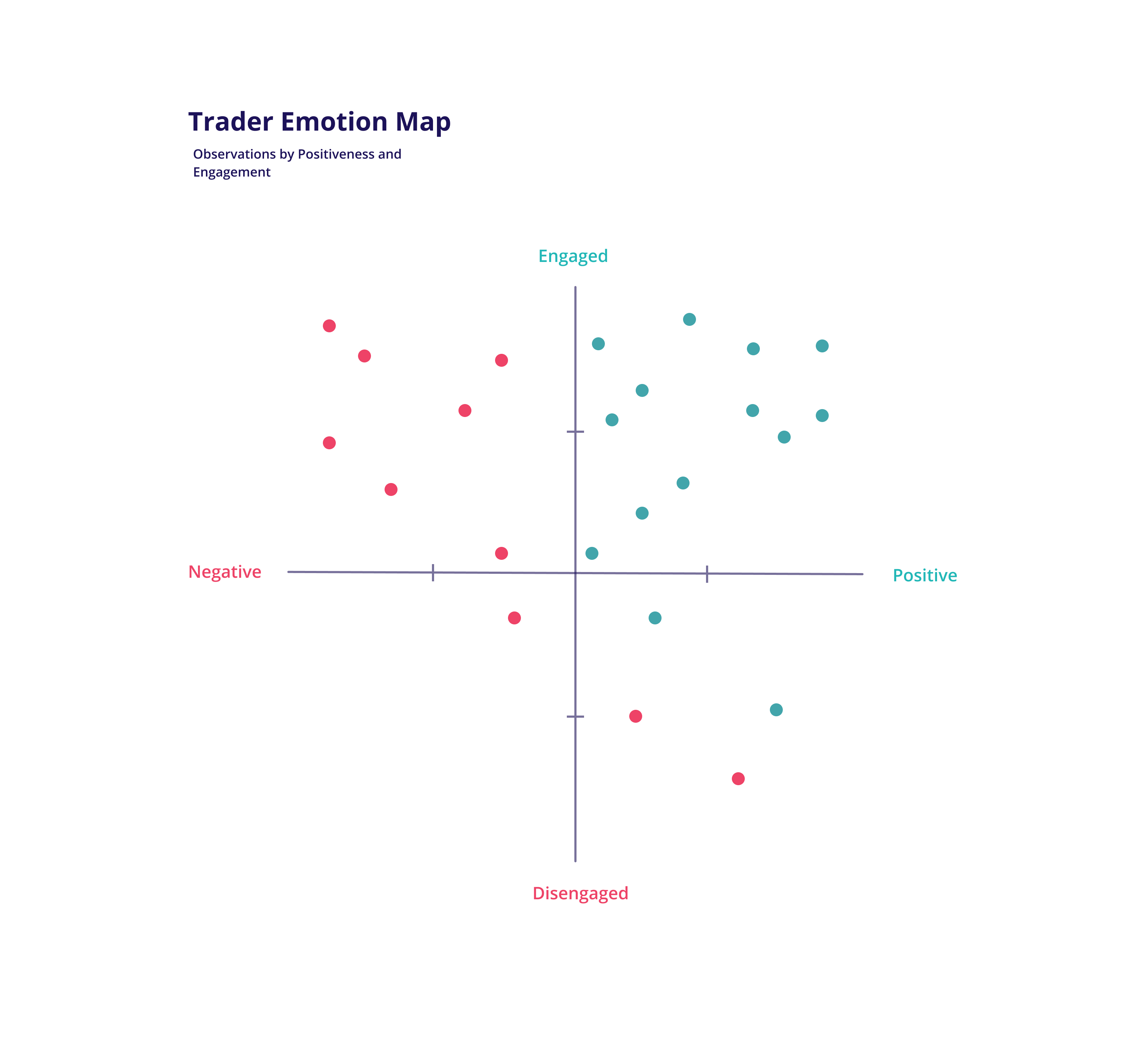
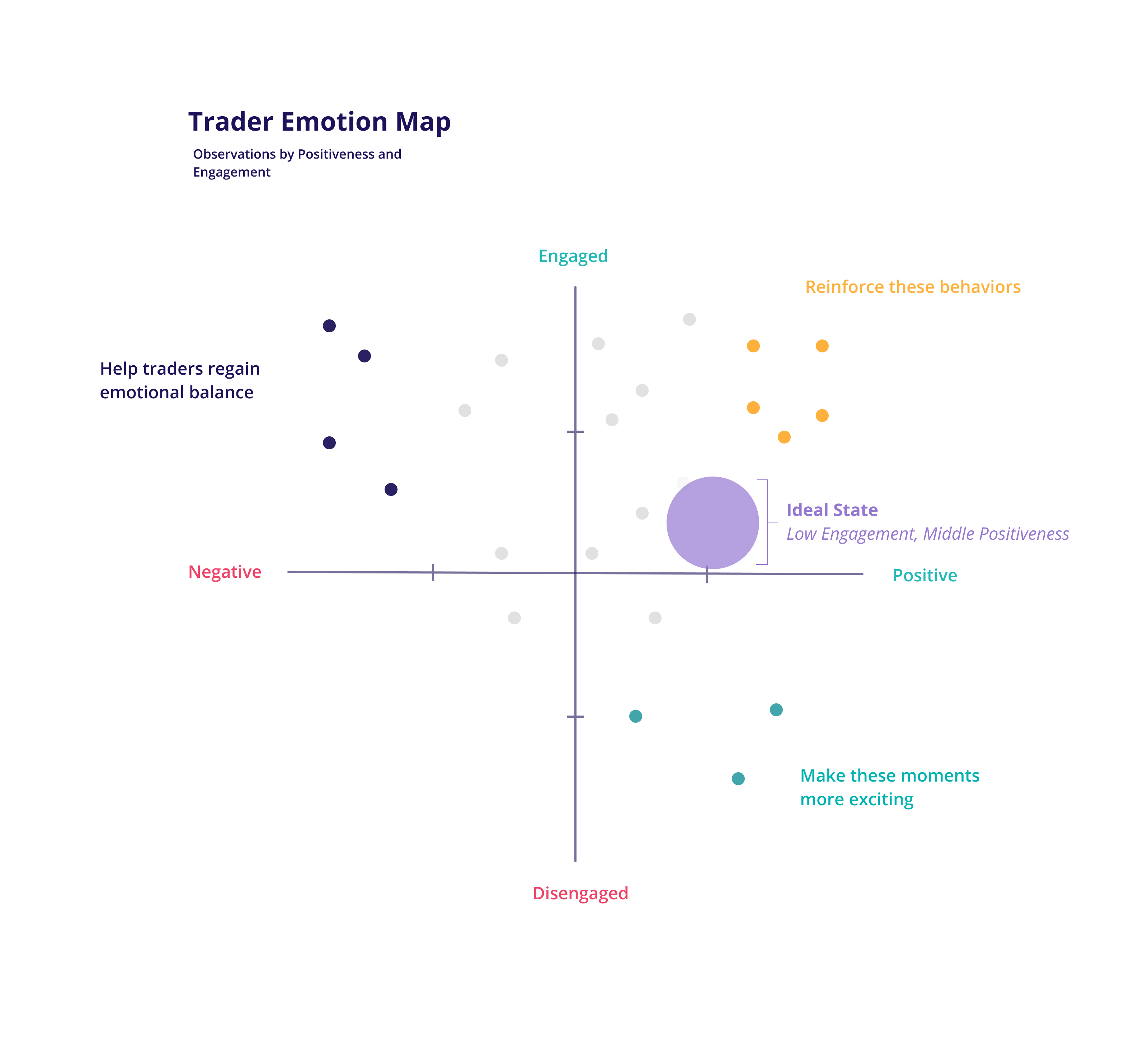
Since we were only able to observe traders in a fast paced setting, we used another method to attempt to capture their emotions. We discovered that many online poker players were actually traders in the day and learned that their thinking patterns were similar around strategy and wins/losses. After interviewing players going through rounds of online poker with real money at stake, we evaluated their stress levels to see how traders might feel.
Jumping into low fidelity ideas for incremental improvements
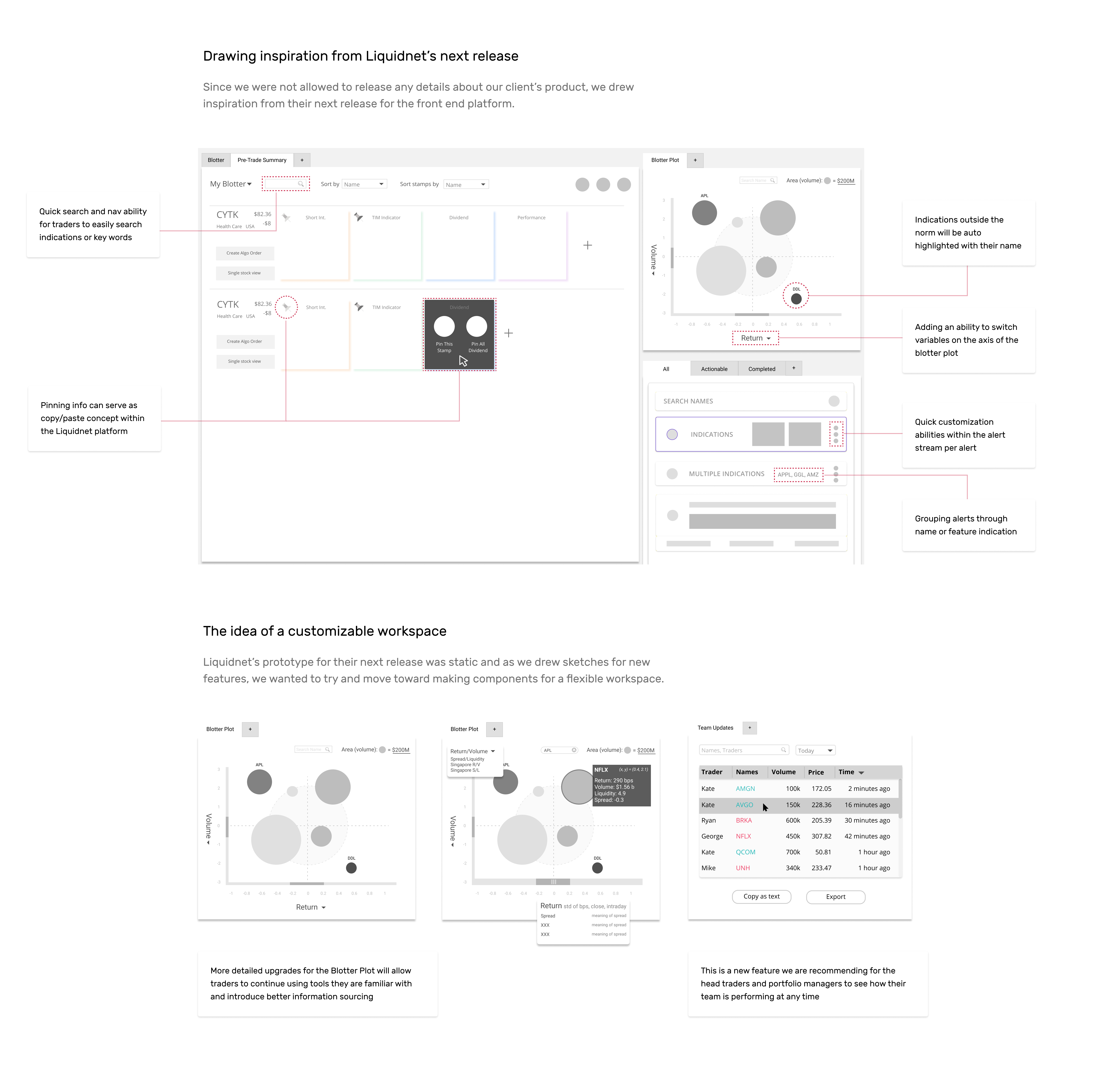
We took our previous insights to brainstorm design ideas through exercises like storyboarding and crazy eights. Although we loved the idea of team work tools, our clients wanted us to focus on enhancing their next release of the Liquidnet platform with more designs around analytics and alerts.
DESIGN RESEARCH
Redirecting the focus to alert driven designs
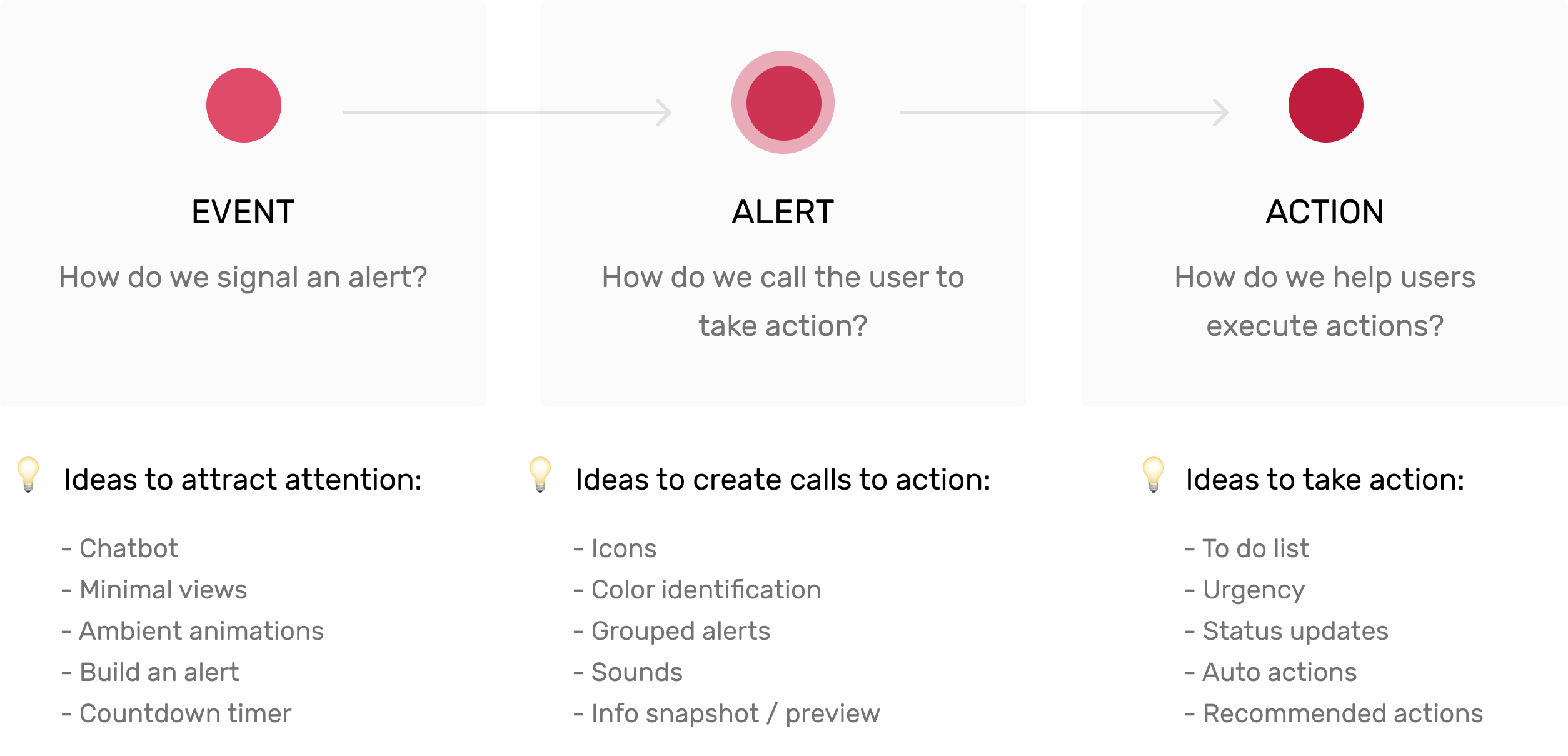
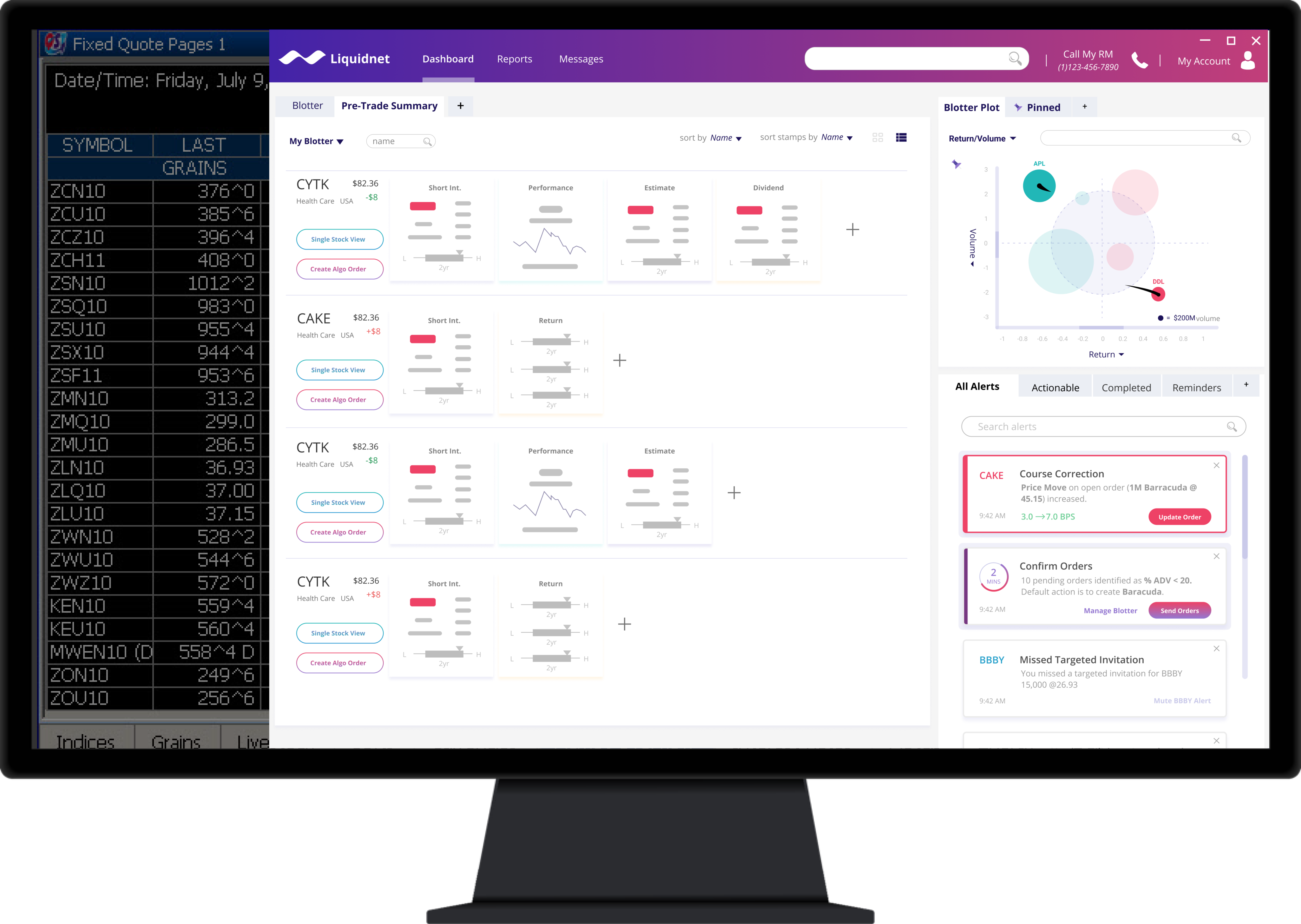
In our mid-fidelity prototypes, our clients expressed that they wanted more focus on the alert stream design. Therefore, we looked into how to better design for alerts and found three stages an alert goes through.
PROTOTYPING & USER TESTING
Integrating our new ideas with old ideas
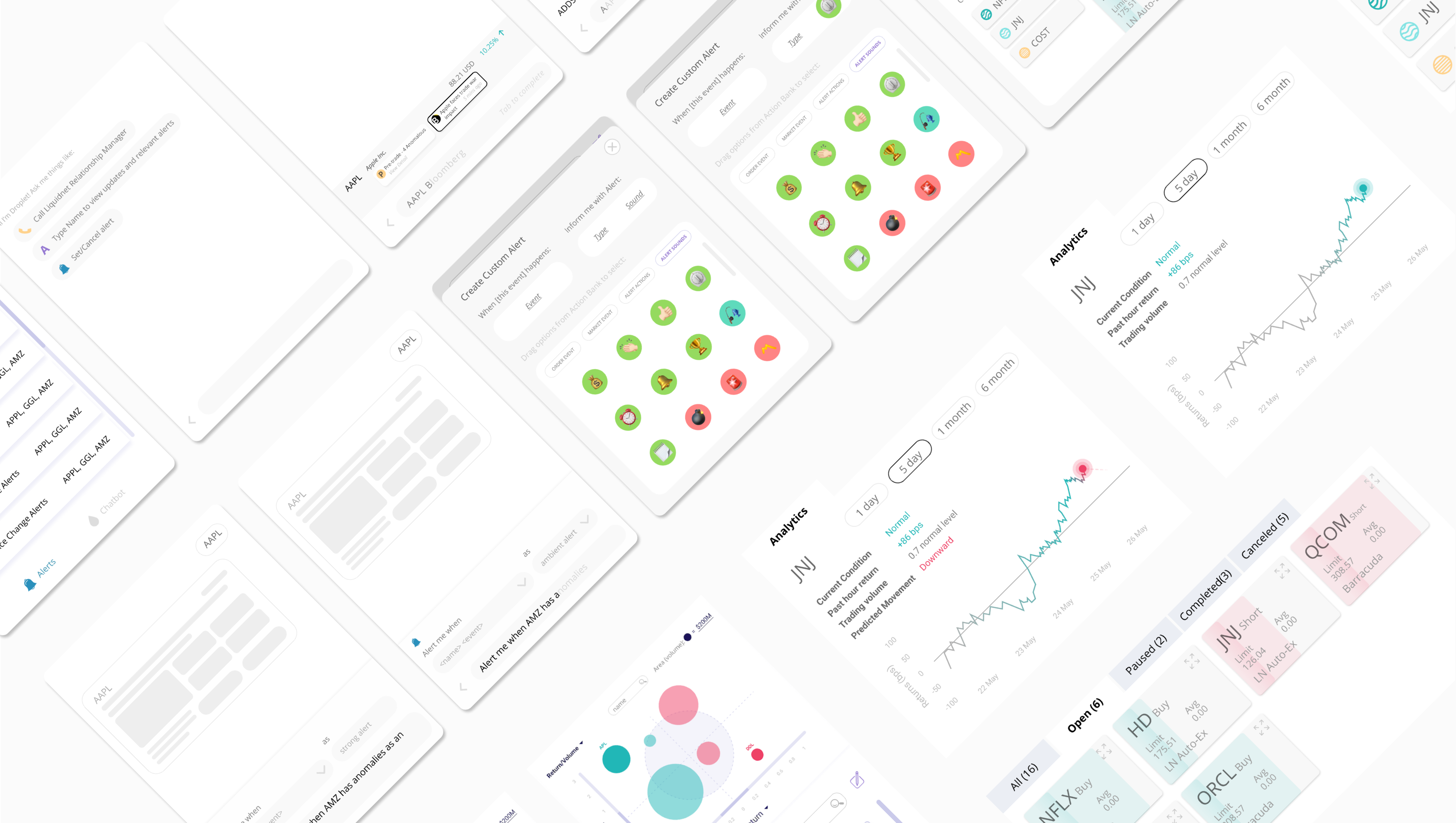
We kept our previous prototypes and mocked up some ideas we came up with around specific alert designs. These included a chatbot, a minimal view, building an alert, etc.
User testing at Liquidnet Labs
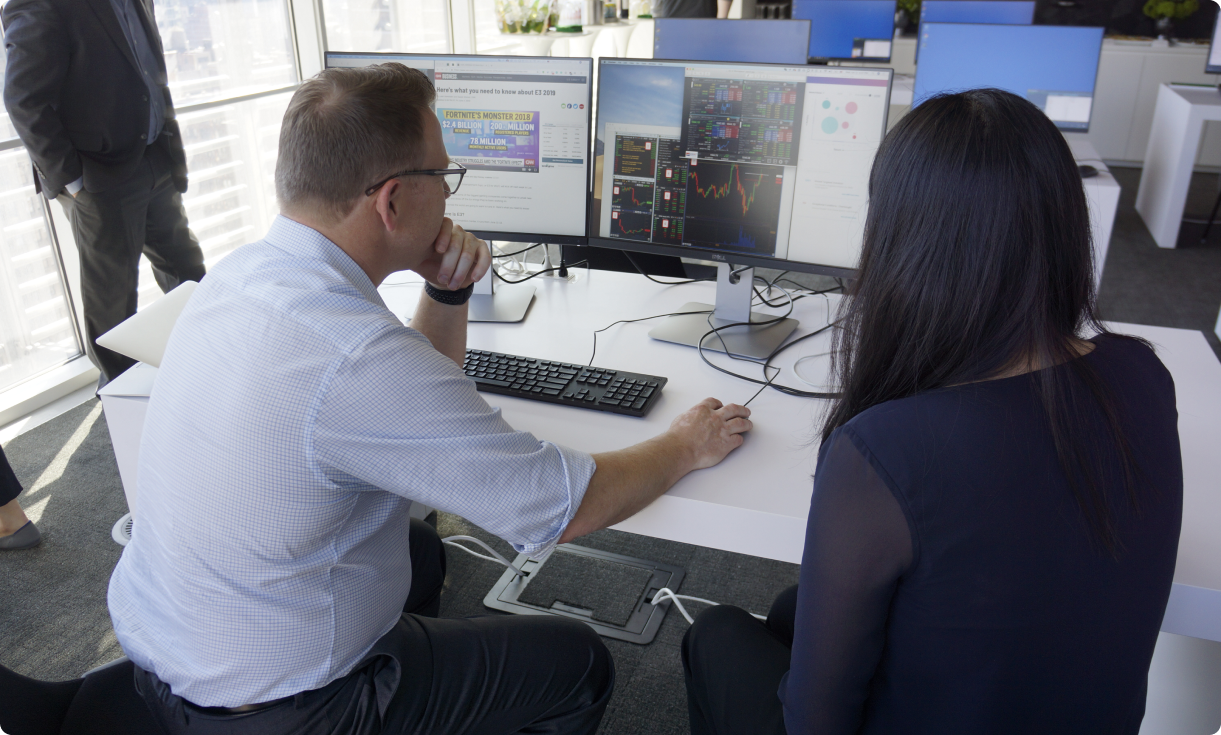
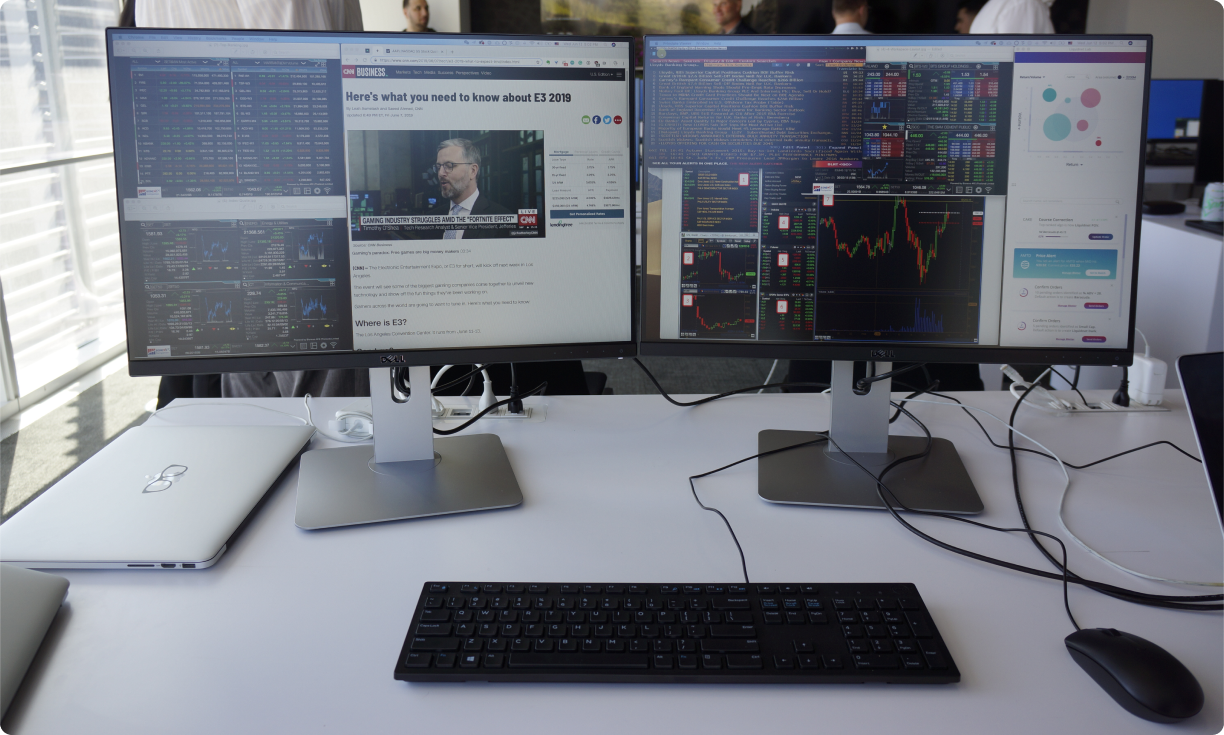
We had a chance to sit down with some Liquidnet traders to test out the interactive prototypes we created. Our test was for them to read news out loud on one monitor while letting us know if they heard or saw any alert come in on the other screen through their periphery. In addition, we followed up with a few specific feature related questions that helped us gauge their feelings towards each prototype.
Narrowing down on features with the best response rates
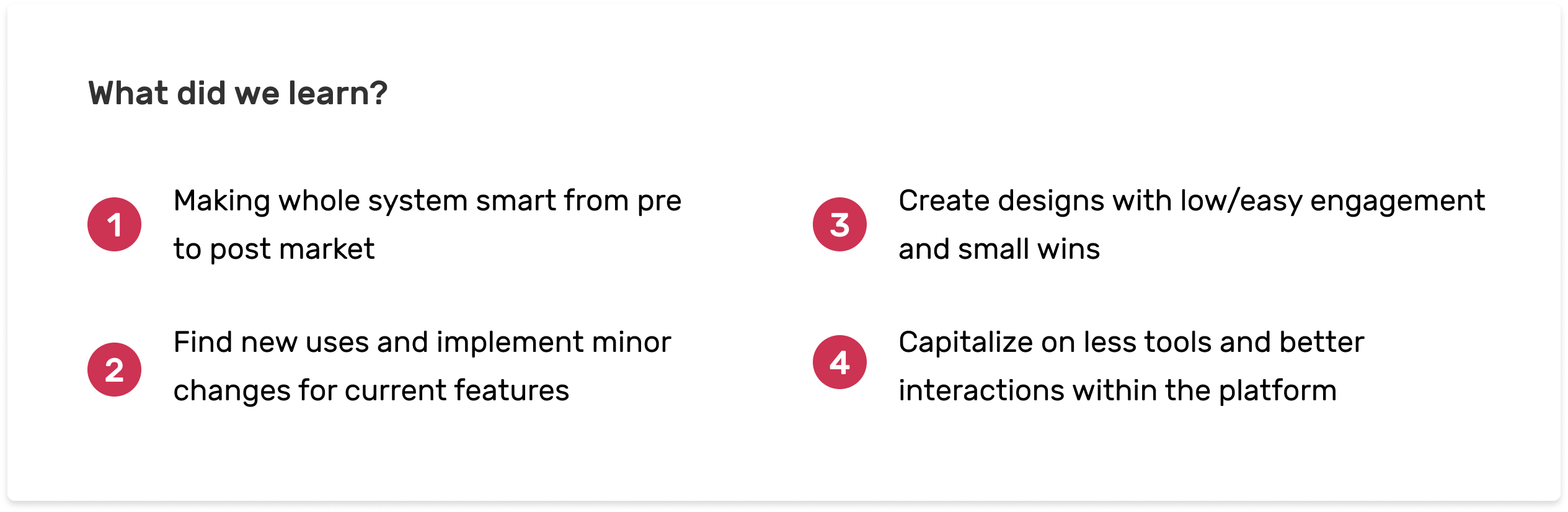
After synthesizing our testing notes through feedback grids and other methods, we selected the features to update for remote user testing with proxy users. After more refinement and minor visual feedback from these users, we decided on our final feature sets. These also helped us create principles for alerting on the Liquidnet platform.
In an ideal world if we had more time, we would try to find more specific trading behavior to tie down to every action and test alerts with these variables. We would also consider pushing out a dark mode design since traders often look at numbers on a dark screen. This could help them avoid headaches and switching between light and dark parts of the monitor.
REFLECTIONS
Be more proactive instead of reactive
Working with business heavy clients in finance was not an easy task for my team. We ended up feeling like we needed to address everything our clients wanted. Only when we started to take charge in our work and use our own intuition, we produced more positive results that resonated with our clients. After all, there is a thin line between not feeling prepared and making too many assumptions.